Industry Knowledge
Why Heat Treatment Specifications Are Non-Negotiable for Carbon Steel Fasteners
A carbon steel bolt that hasn't been properly heat treated can fail at 60–70% of its rated load — a margin that quietly endangers the assemblies depending on it. For customers sourcing from Carbon Steel Fasteners Suppliers, understanding heat treatment isn't just technical curiosity; it's a procurement checkpoint that separates reliable partners from risk factors.
Carbon steel fasteners typically undergo one of three core thermal processes, each producing a distinct mechanical profile:
| Process |
Temperature Range |
Primary Effect |
Typical Application |
| Quench & Temper |
800–900°C quench / 150–650°C temper |
High tensile strength + controlled ductility |
Grade 8.8–12.9 structural bolts |
| Annealing |
700–900°C, slow cool |
Stress relief, improved machinability |
Pre-machining blanks, cold-formed parts |
| Case Hardening |
900–950°C carburizing |
Hard surface, tough core |
Self-tapping screws, thread-forming fasteners |
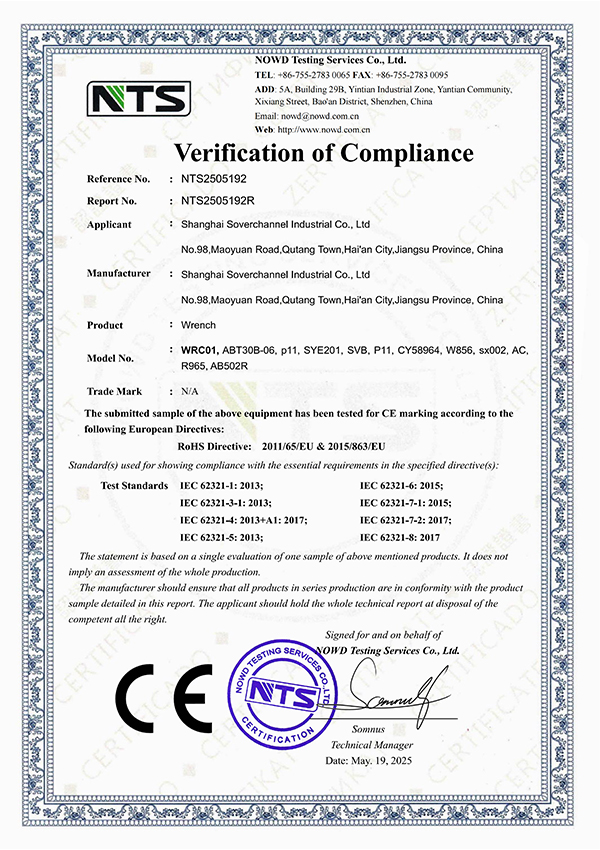
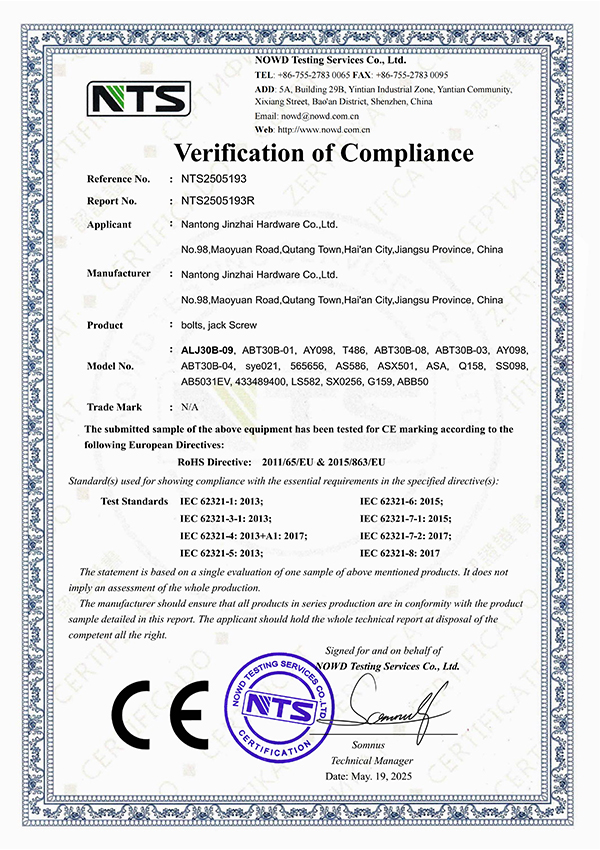
Shanghai Soverchannel Industrial Co., Ltd. applies in-process hardness verification at its Nantong Jinzhai Hardware Co., Ltd. manufacturing plant, using Rockwell HRC testing after each thermal cycle. This catch-at-source approach prevents grade mislabeling — a common issue when heat treatment is outsourced without documented traceability.
Alloy Composition Variables That Define Custom Alloy Steel Fasteners Performance
Not all alloy steel fasteners are engineered the same way. The chemical composition — specifically which alloying elements are added and in what proportion — determines whether a fastener will perform under cyclic fatigue, high temperature, or corrosive stress. Customers requesting Custom Alloy Steel Fasteners need to communicate the service environment, not just the dimensional drawing.
Key Alloying Elements and Their Effects
- Chromium (Cr, 0.5–2%): Improves hardenability and oxidation resistance. Critical for fasteners used in under-hood automotive environments where surface temperatures routinely reach 200–350°C.
- Molybdenum (Mo, 0.15–0.4%): Significantly raises tensile strength at elevated temperatures and reduces susceptibility to temper embrittlement — a failure mode that causes sudden fracture in press-fit or high-clamp-load assemblies.
- Vanadium (V, 0.05–0.15%): Refines grain structure after heat treatment, improving fatigue life. Common in connecting-rod bolts where billions of stress cycles are expected over a vehicle's lifetime.
- Boron (B, 5–30 ppm): A trace addition that dramatically increases hardenability with minimal cost impact. Standard in 10B21, 10B38 grades used in high-volume automotive fastener production.
- Nickel (Ni, 1–4%): Enhances low-temperature toughness and impact resistance — essential for fasteners specified in chassis or suspension components exposed to sub-zero operating conditions.
Shanghai Soverchannel Industrial Co., Ltd. works with customers to map alloy selection against three service parameters: peak operating temperature, minimum impact temperature, and median fatigue cycle count. Supplying a mill test certificate (MTC) with each shipment is standard practice, allowing downstream engineers to cross-verify composition against the agreed specification.
Understanding Passivation Standards When Sourcing Wholesale Stainless Steel Fasteners
Stainless steel corrodes — under the right (wrong) conditions. The chromium oxide passive layer that gives stainless its corrosion resistance can be breached by free iron contamination from tooling, by chloride environments, or by weld heat-affected zones. For buyers sourcing Wholesale Stainless Steel Fasteners in volume, passivation treatment is the difference between consistent field performance and early-stage rust complaints.
Common Passivation Methods Compared
| Method |
Standard Reference |
Process |
Best for |
| Nitric Acid Passivation |
ASTM A967 Type I |
20–40% HNO₃ bath, 20–50°C |
High-volume industrial 304/316 fasteners |
| Citric Acid Passivation |
ASTM A967 Type VI |
4–10% citric acid, ambient |
Medical, food-grade, or eco-sensitive applications |
| Electropolishing |
ASTM B912 |
Electrochemical metal removal |
Cleanroom, semiconductor, precision instruments |
When placing wholesale orders, buyers should specify the passivation class in the purchase order, not leave it to supplier discretion. Grade 316 (A4) stainless fasteners treated to ASTM A967 Type VI meet the ISO 16048 verification test, which can be requested as a lot acceptance criterion. Shanghai Soverchannel Industrial Co., Ltd. applies these documented protocols under its full-process inspection system, ensuring passivation records are traceable to production batch and delivery date.
Thread Tolerance Classes: What the Numbers in Your Drawing Actually Control
A callout like "M10×1.25 – 6H/6g" specifies far more than thread pitch. The tolerance class controls fit tightness, the allowable variation in major and pitch diameter, and ultimately whether a fastener can be reliably installed in an automated assembly line at 3,000 units per hour without jamming or cross-threading. Misreading or overlooking thread class is one of the most common sources of quality disputes between buyers and fastener manufacturers.
ISO 965 Thread Tolerance System at a Glance
- 4H/4g (Close fit): Tight positional accuracy, minimal radial play. Used in precision instruments, aerospace ground support equipment, or fixtures requiring repeatable torque response. Requires slower assembly or lubrication to install.
- 6H/6g (Medium fit — default): The standard for the majority of industrial and automotive applications. Balances ease of assembly with sufficient contact area for reliable clamp load. If no tolerance class appears on a drawing, assume 6g for the bolt and 6H for the nut.
- 8H/8g (Free fit): Greater clearance for quick assembly, blind installations, or environments where corrosion or debris accumulation is expected (e.g., agricultural or outdoor construction hardware).
Automotive fasteners often carry tighter-than-standard tolerance requirements defined by OEM-specific drawing notes, particularly for cylinder head, wheel hub, and suspension attachment points. Shanghai Soverchannel Industrial Co., Ltd., with its deep background in automotive fastener production, routinely produces non-standard threads to customer-defined tolerance classes verified by thread ring and plug gauges calibrated to national metrology standards.
Evaluating Carbon Steel Fasteners Suppliers on Process Capability, Not Just Price
Price-per-piece is a poor proxy for supplier quality. Two quotations for the same M8 flange bolt may sit 15% apart, but the less expensive offer may involve cold-heading tooling running at Cpk 0.9 — a process barely holding specification — while the higher quote reflects tooling maintained at Cpk 1.33 or above. Over a production run of 500,000 pieces, the difference is thousands of out-of-tolerance parts that either pass or fail receiving inspection depending on how tight the buyer's AQL sampling plan is.
Process Capability Indicators to Request from Carbon Steel Fasteners Suppliers
- Cpk reports on critical dimensions: Head height, across-flats, shank diameter, thread major diameter. Request Cpk ≥1.33 as a contractual minimum for safety-relevant parts.
- Gauge R&R studies: Confirms that measurement systems are reliable. A Cpk value is meaningless if the measurement device itself introduces 30% of the observed variation.
- Control charts (X-bar/R or IMR): Real-time evidence of process stability. Trends toward upper or lower control limits indicate upcoming tooling wear — something a capable supplier monitors proactively.
- First Article Inspection (FAI) reports: A complete dimensional survey of a first production part against the drawing, required before any volume shipment begins.
Shanghai Soverchannel Industrial Co., Ltd. integrates these quality tools into its standard production workflow through its manufacturing arm, Nantong Jinzhai Hardware Co., Ltd. Customers receive dimensional reports, material certifications, and surface treatment records with each delivery — not as optional add-ons, but as a baseline expectation built into every order.
Special-Shaped Fasteners: Engineering Constraints That Define What's Manufacturable
Special-shaped or non-standard fasteners are ordered when standard catalog parts can't solve the assembly problem — usually because of envelope constraints, weight targets, or load paths that standard head geometries can't accommodate. However, "custom" doesn't mean "anything goes." Manufacturing method, material, and finishing all impose hard limits on geometry.
Design Constraints by Manufacturing Process
| Process |
Geometry Freedom |
Min. Wall / Feature |
Volume Suitability |
| Cold Heading |
Moderate — rotationally symmetric heads |
0.8mm wall on flanges |
High volume (10,000+) |
| CNC Turning/Milling |
High — asymmetric, complex profiles |
0.3mm feature size |
Low-medium (1–5,000) |
| Forging + Machining |
High — near-net shape, then machined |
1.5mm minimum in forged zone |
Medium volume (2,000–50,000) |
| Welding Assembly |
Very high — multi-component forms |
Weld access >5mm clearance |
Low-medium prototype to series |
Shanghai Soverchannel Industrial Co., Ltd. specializes in non-standard bolts and complex special-shaped components across all four of these processes, with welding component capability added as a distinct competency. Engineering collaboration at the design stage — providing feedback on draft angles, minimum radii, and surface finish accessibility — is how the company helps customers avoid design iterations that add cost and delay without improving function.